Rethinking an Educational App
Holy Owly, an App for Children
Mobile • EdTech • Gamification • Branding
Product Designer · 2019–2021
Context
Holy Owly is an EdTech startup developing a language-learning app for children.
As the company grew, it needed to evolve its brand identity, app, and ecosystem to create a more cohesive experience for children, parents, and teachers.
Industry
Education
Platforms
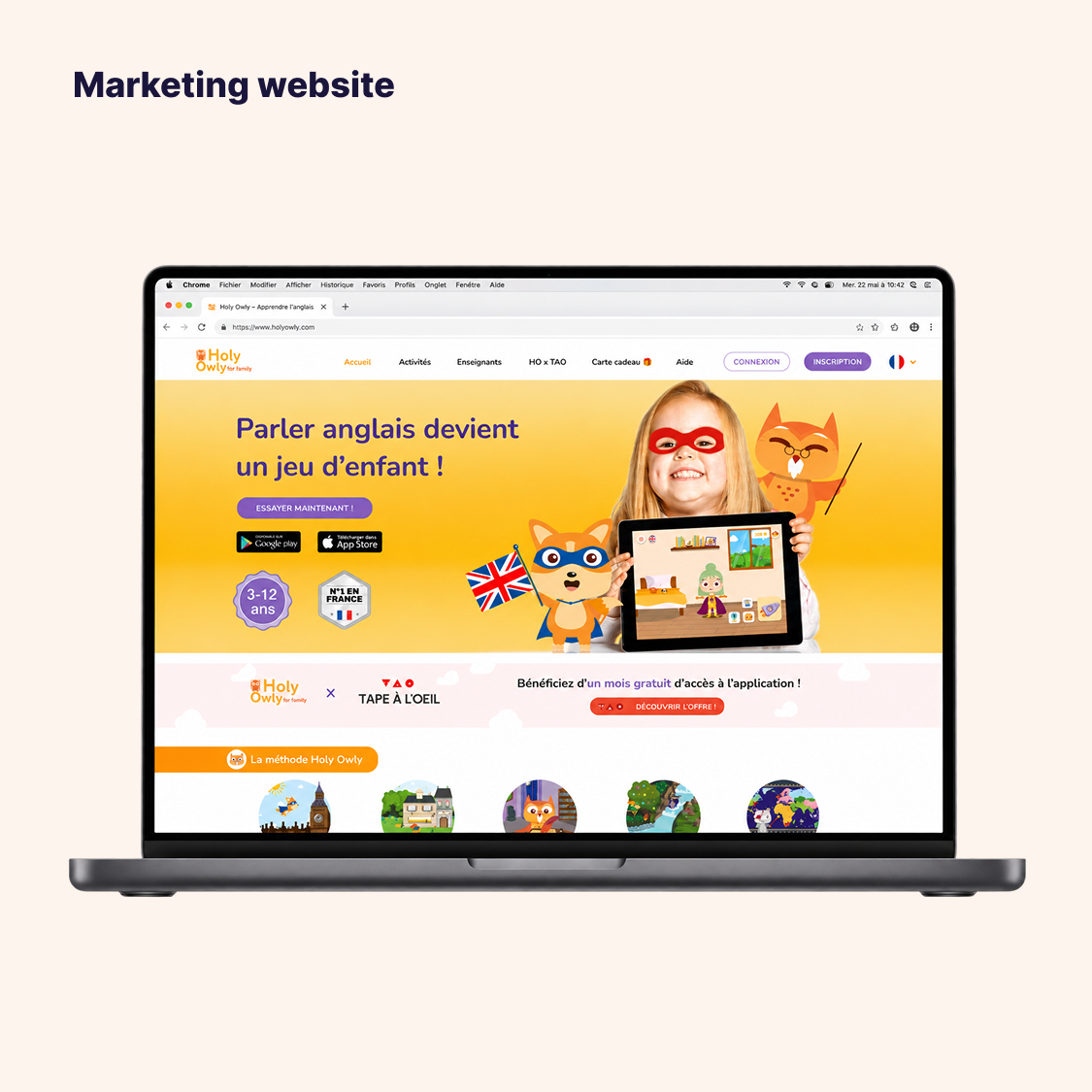
Mobile app and marketing website
Users
Children, parents, teachers
Project team
CEO, developers, SEO specialist, Head of Education, communications and marketing team
The Challenges
Discovering a New Domain
Designing a product for children meant stepping into a field I was discovering, while understanding the sometimes different expectations of parents, teachers, and educational teams.
Finding the Right Balance
The app needed to make learning engaging on a daily basis through gamification, while preserving its educational purpose and limited screen time.
Building a Product That Could Evolve
Beyond the app redesign, the goal was to establish solid foundations — brand identity, user journeys, and components — to support the product’s long-term growth.
Structuring Collaboration
The team brought together diverse profiles, but design and prioritization rituals were still limited. The challenge was to create a working framework that encouraged collaboration, alignment, and collective decision-making.
My Approach
Understand
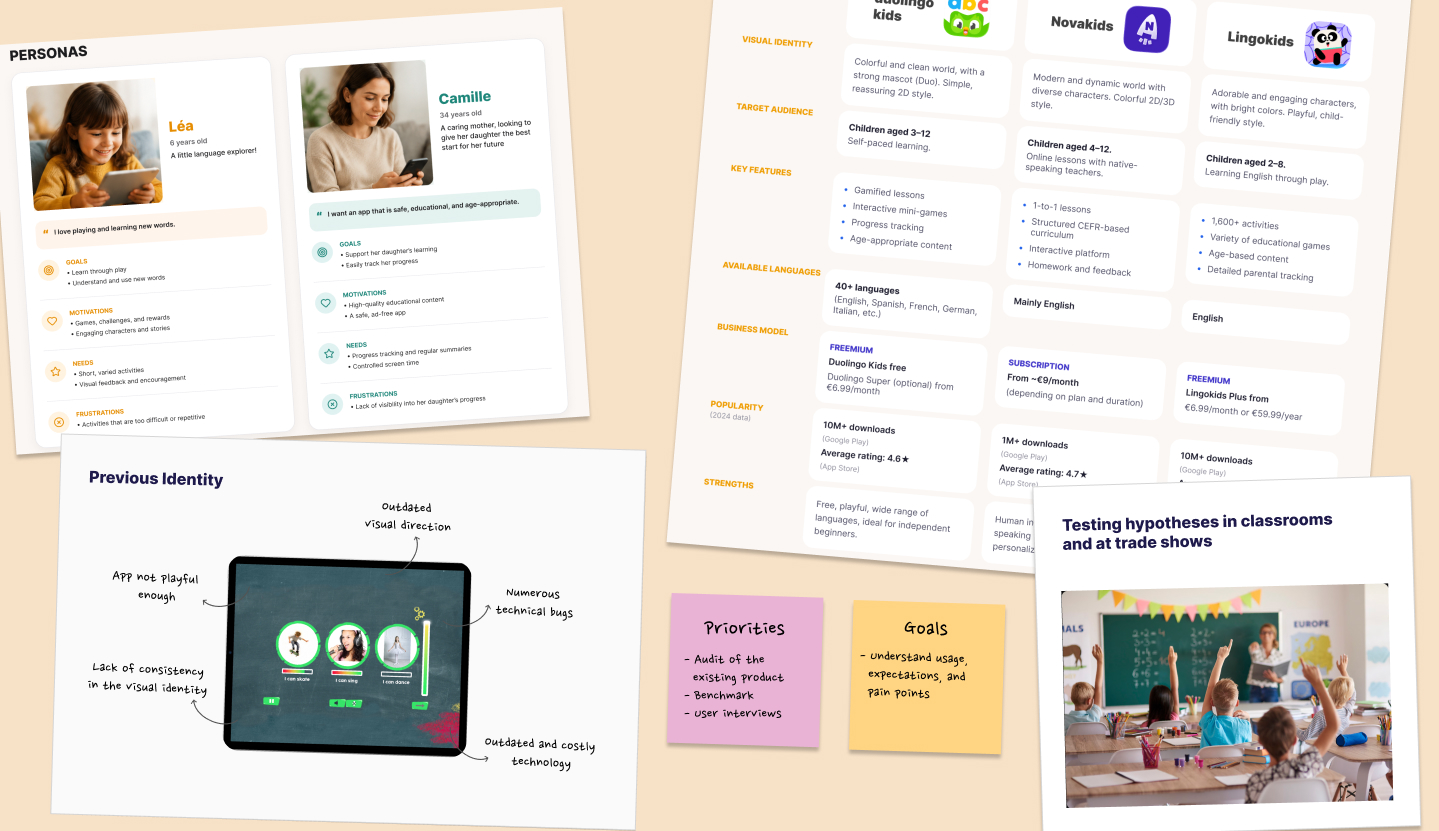
Before proposing solutions, I started by understanding the product, its identity, and its ecosystem. I conducted an assessment of the existing product, analyzed competitors, and developed initial personas to better define the needs of children, parents, and teachers. This phase was enriched by field research, in schools, at trade shows, and directly with users, whose feedback informed the project’s initial direction.
Define
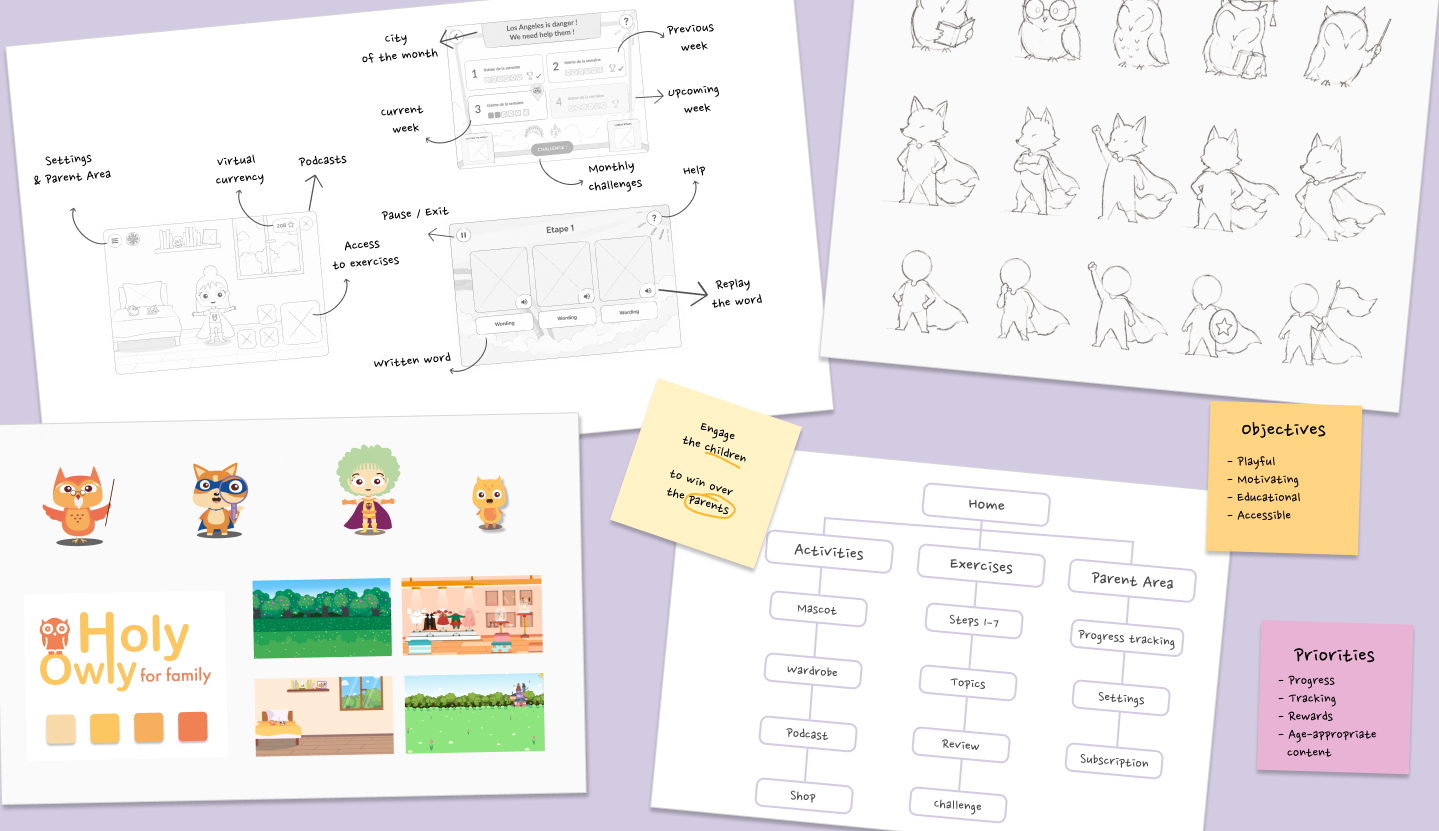
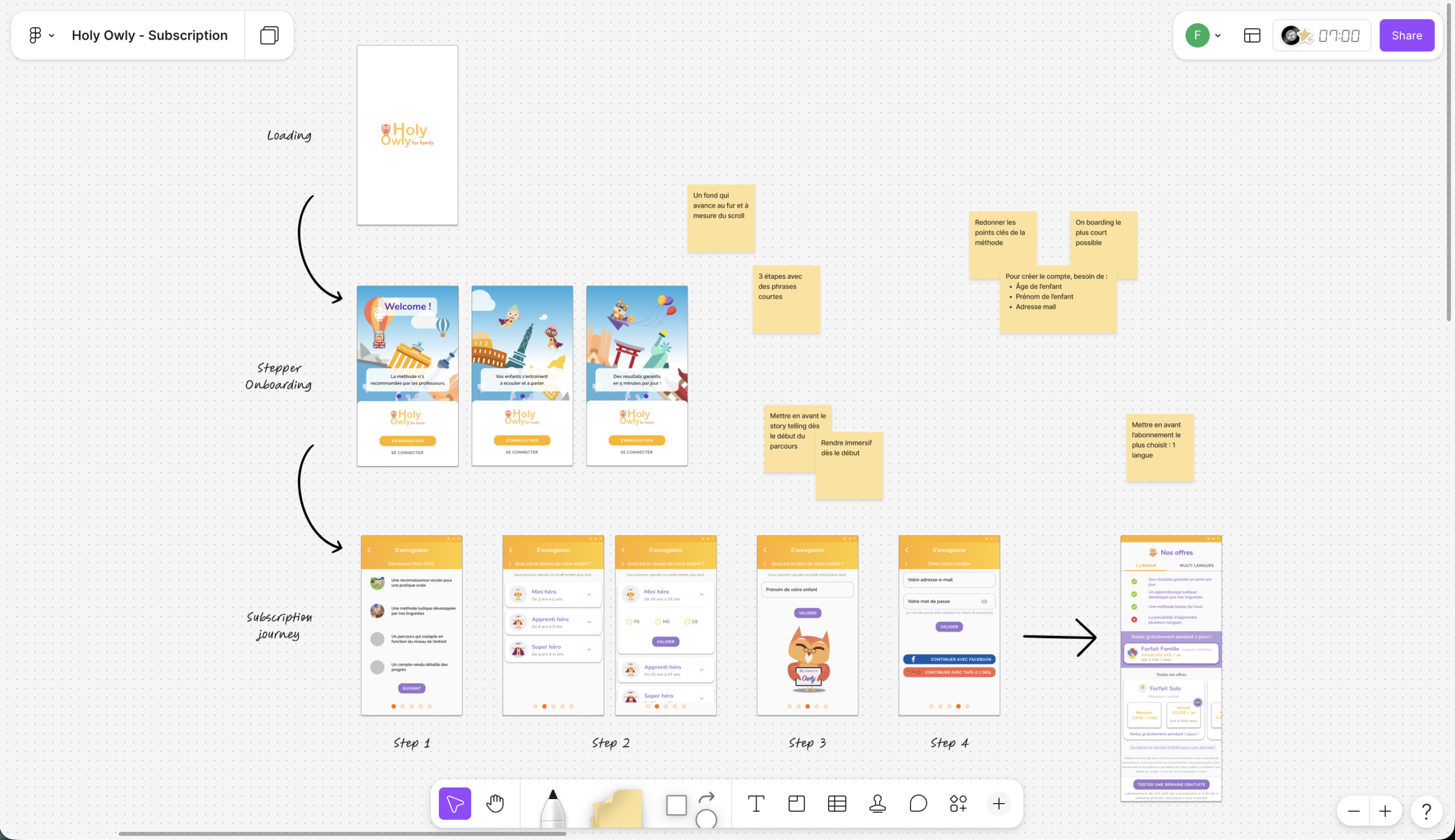
The insights gathered were progressively translated into user journeys, prototypes, and initial visual identity concepts. Each idea was tested against feedback from the team and users to prioritize the most relevant features. This iterative approach allowed us to evolve the product quickly, combining real-world feedback with data from the app.
Design Together
The project was shaped through close collaboration between the founders, Head of Education, developer, marketing, and design teams. I helped introduce new ways of working to encourage discussion, share decisions, and maintain a common vision for the product. This ongoing collaboration allowed us to align on priorities, challenge different perspectives, and evolve the app throughout its development.
Key Decisions
The main decisions that guided the product design and shaped its evolution.
Redefining the Identity Before Evolving the Product
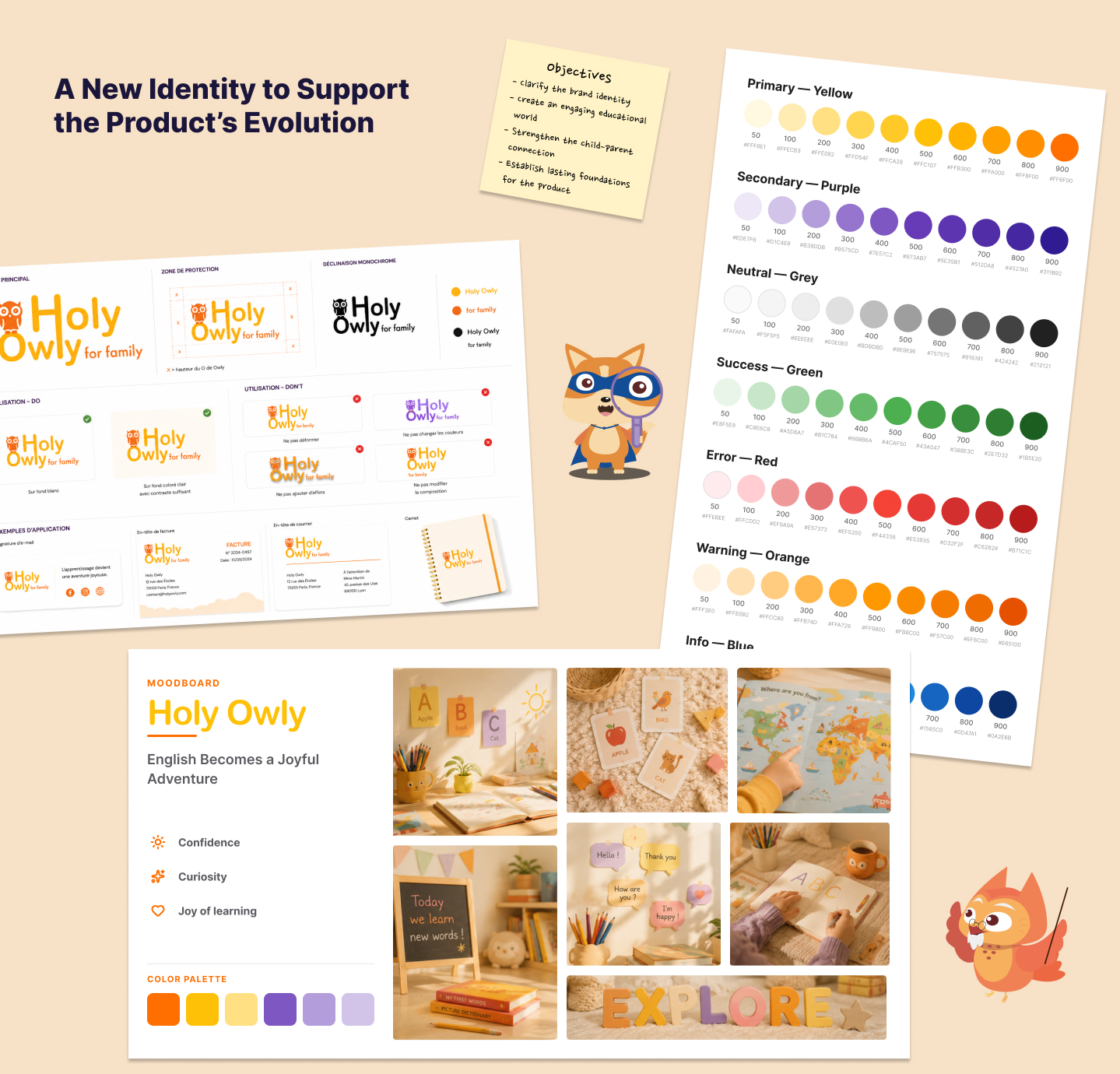
Before redesigning the app, I chose to go back to the fundamentals. The visual identity no longer reflected the product’s ambitions or its users’ expectations. By working on the brand positioning, personas, and market references, we built a coherent foundation to support the product’s evolution.
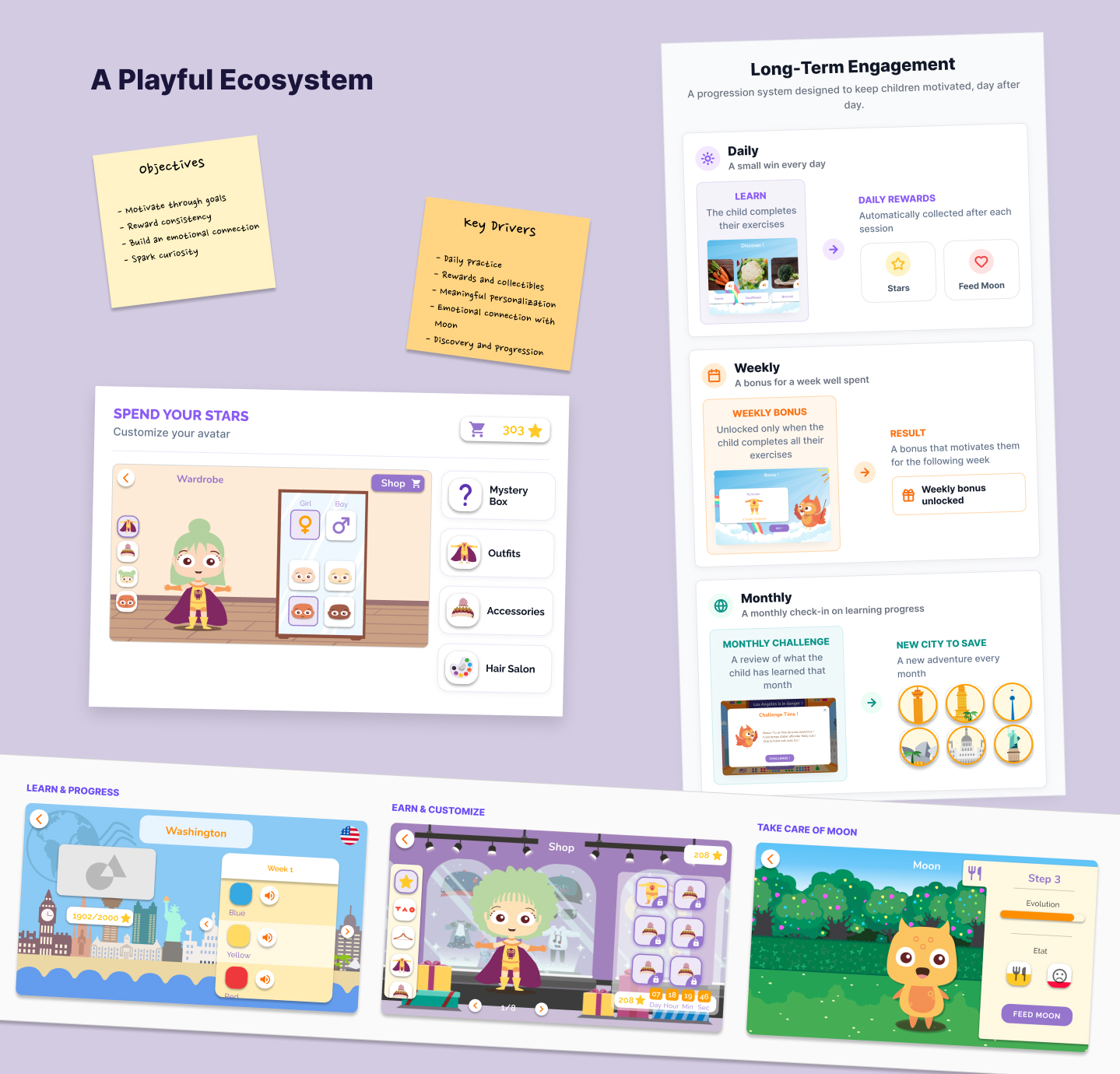
Turning Gamification into a Learning Tool, Not a Distraction
Children needed to be encouraged to return to the app regularly without increasing their screen time. We therefore introduced gamification mechanics designed to support learning: avatars, virtual currency, and rewards helped strengthen motivation while keeping the educational purpose at the heart of the experience.
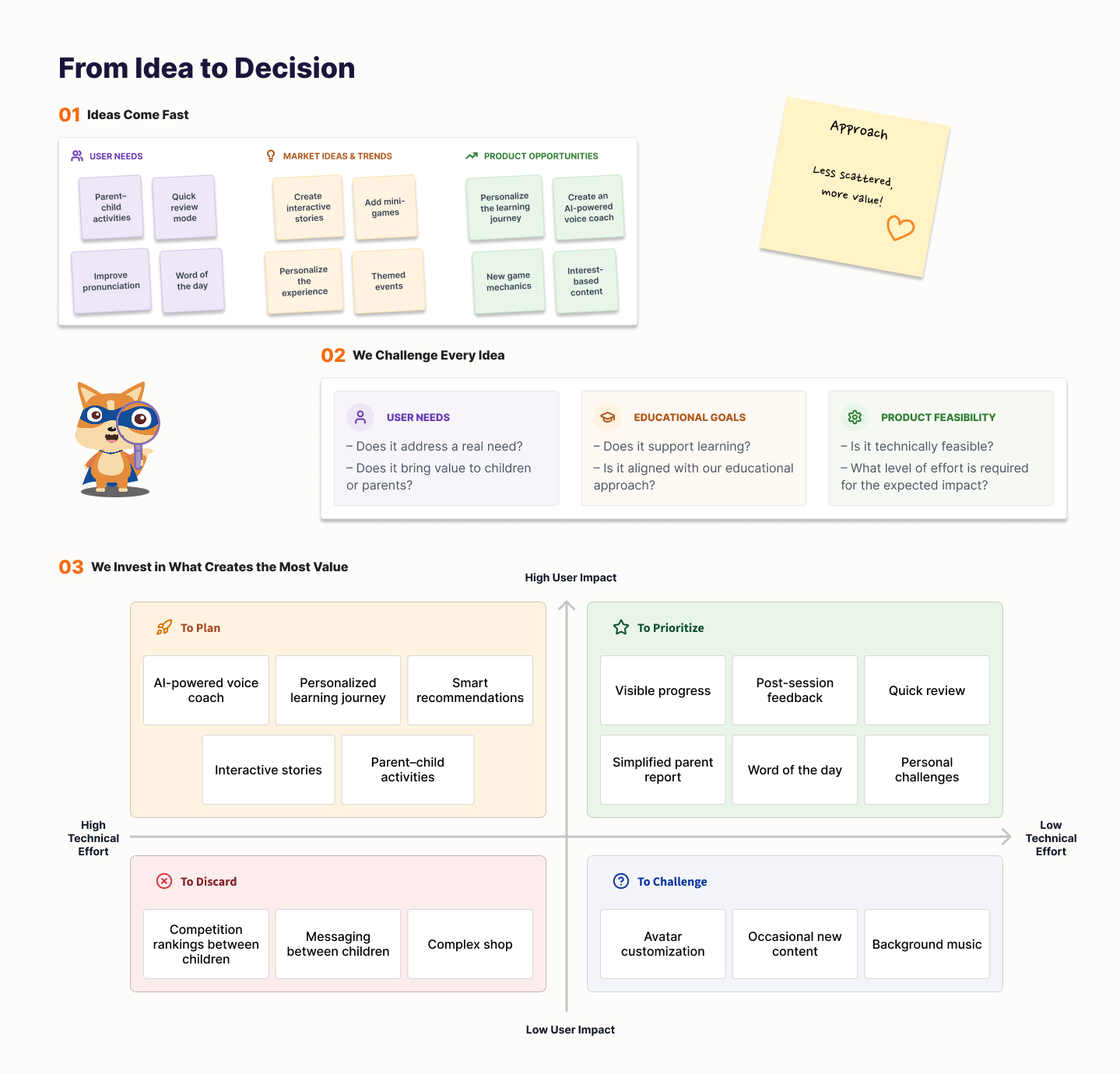
Prioritizing User Needs Over Following Competitors
In a startup, ideas can come quickly. Rather than systematically replicating competitors’ features, we aimed to validate each proposal against user needs, technical constraints, and educational goals, allowing us to focus our efforts on the most relevant improvements.
Results
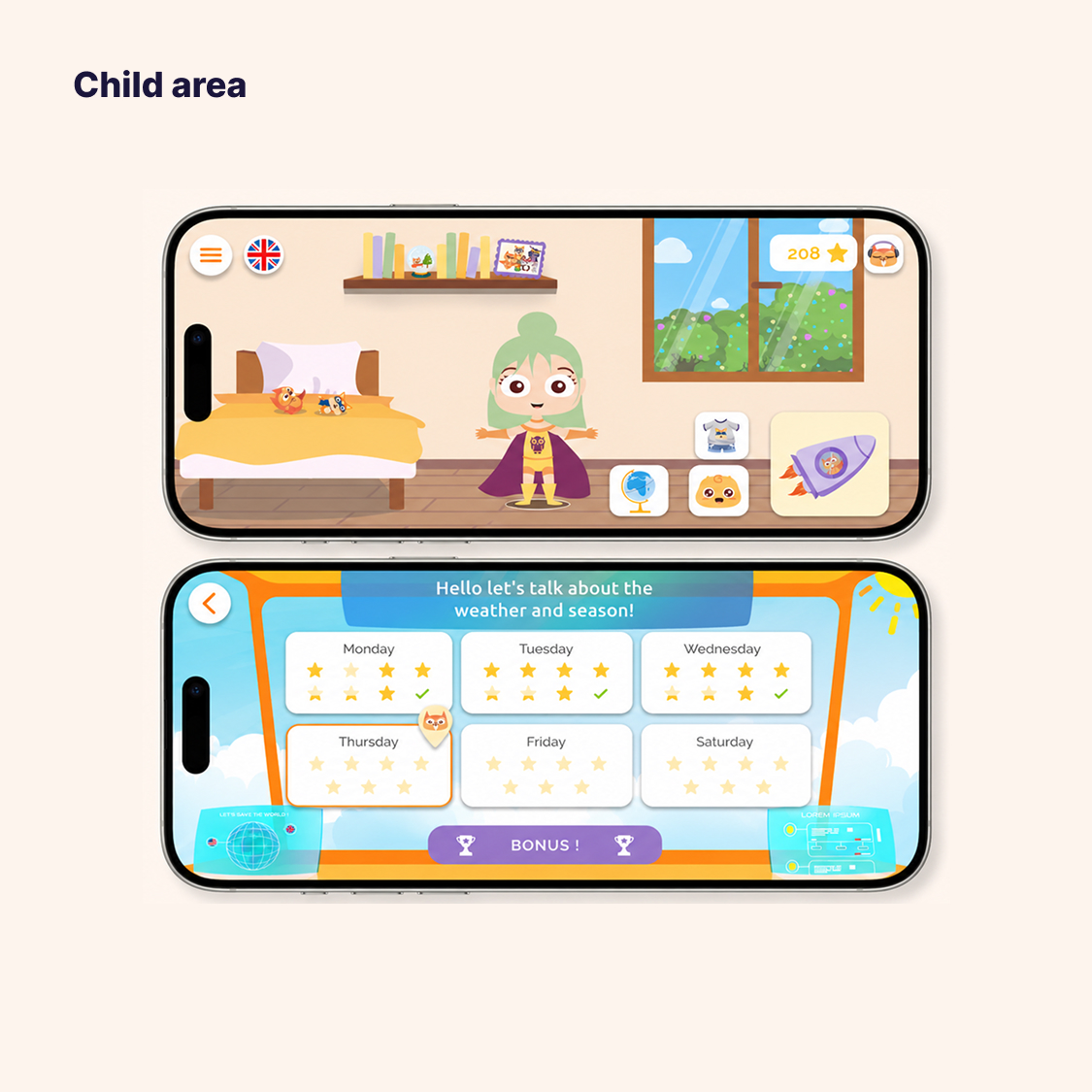
For the Product
The app evolved from a series of exercises into a more engaging experience, through the introduction of gamification mechanics designed to encourage daily practice without increasing screen time.
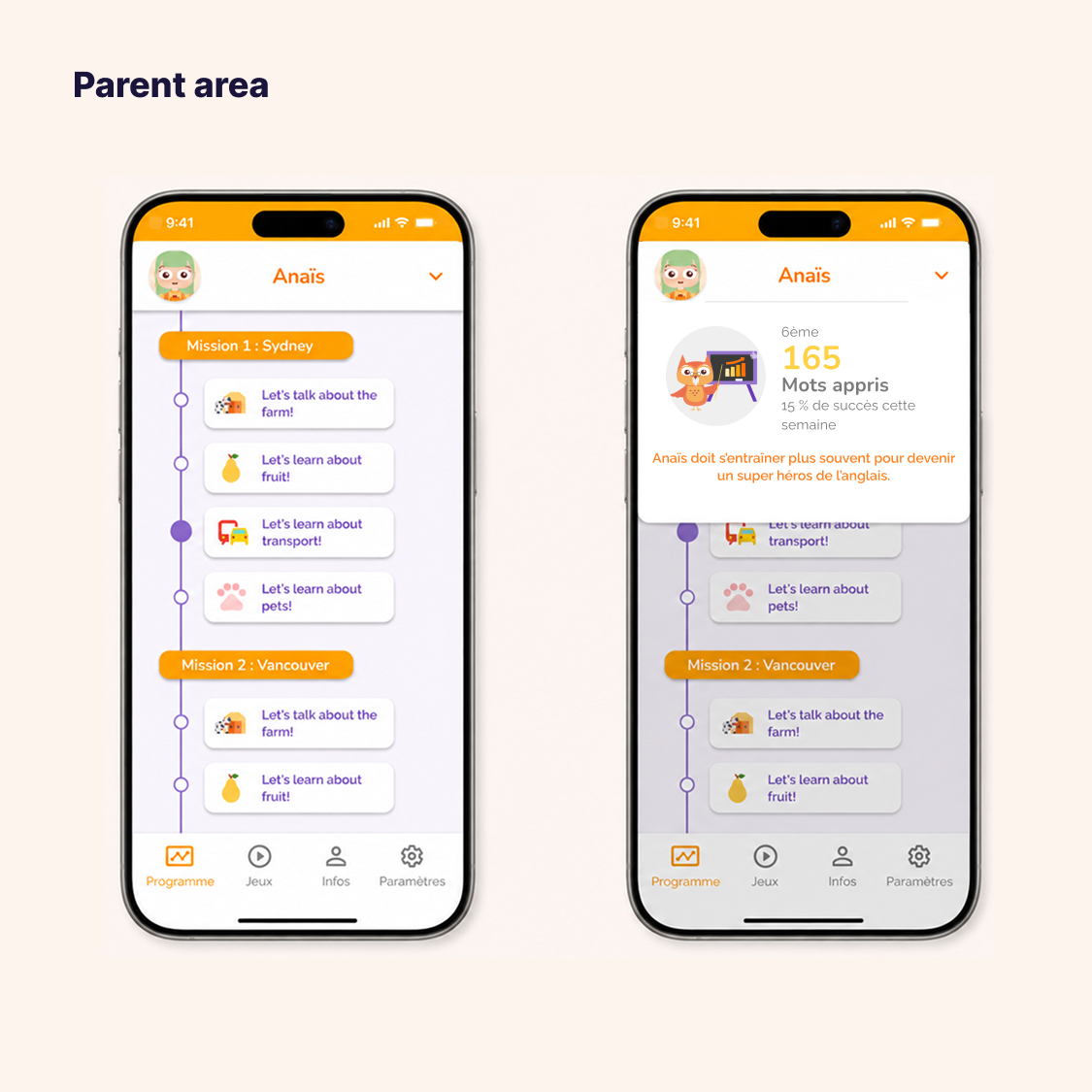
For the Teams
Balancing user needs, technical constraints, and business goals gradually replaced a process driven more by intuition or competitors’ initiatives.
For My Practice
This experience allowed me to work across a wide range of topics, from branding to UX/UI, as well as gamification, user journeys, and Design Systems.
Looking Back
Years later, this project still influences the way I design products and collaborate with teams.
What Worked
Involving users and key stakeholders early on helped us evolve the product around real-world needs and make more informed decisions.
What I Would Do Differently
Today, I would involve technical constraints earlier in the project to build a shared language with developers and anticipate design trade-offs more effectively.
What This Project Taught Me
This project taught me that it is often more valuable to evolve a product based on user feedback than to try to design the perfect solution from the outset.
Get in touch
I believe great products are built through collaboration, curiosity, and a genuine focus on the people who use them.
If this approach resonates with you, I’d love to hear from you and explore how we could create meaningful products together.